

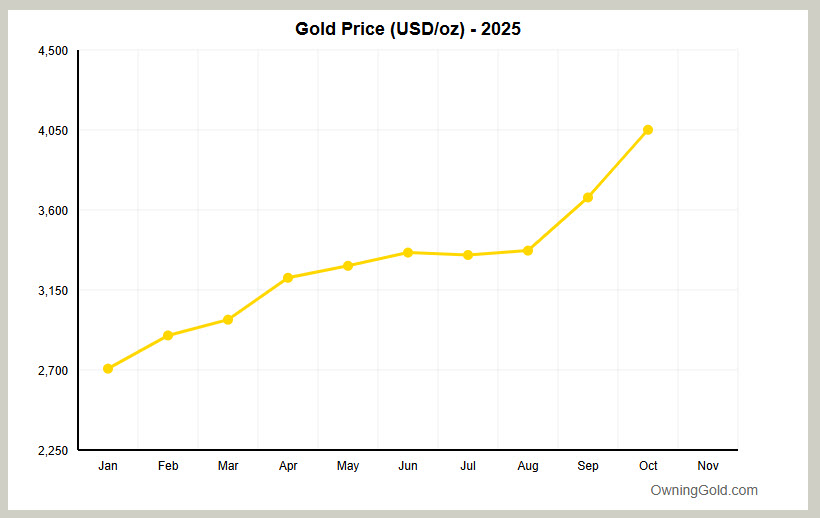
The gold market has a way of reminding us—often abruptly—why it has survived every economic era ever thrown at it. And here in 2025, after a breathtaking run-up that surprised even seasoned precious-metals veterans, many holders are left asking the same question: Is this the moment to add more, sit tight, or trim back?
In a year marked by unpredictable politics, sharp currency swings, and a global appetite for real stores of value, gold hasn’t just inched upward—it has sprinted. Let’s break down what’s behind the rally, what matters right now, and how to think about your next move.
Why Gold Pushed So Hard, So Fast
Three forces have converged to push physical gold prices dramatically higher this year. First, inflation hasn’t eased as much as central banks predicted, putting ongoing pressure on real purchasing power. Second, political instability in several key regions has kept safe-haven demand high. And third, central banks—especially in emerging economies—have continued expanding their reserves.
For everyday holders, the message is clear: this rally wasn’t speculative froth. It was rooted in real macroeconomic tension, exactly the environment in which gold tends to shine.
Is Gold Overheated, or Is There Room to Run?
When prices rise this quickly, it’s natural to worry about overheating. Historically, gold moves in waves—sharp climbs, plateaus, modest pullbacks. Right now, we’re still in the core phase of a momentum cycle fueled by widespread uncertainty.
What that suggests is that while short-term dips are always possible (and frankly healthy), we have not yet seen the kind of bubble behavior that typically signals a true top. The fundamentals behind this rally haven’t weakened.
Where Smart Buyers Are Positioning Themselves
One advantage of holding physical gold is that you’re not trading tick by tick—you’re building a hedge that sits outside the financial system. That mindset helps clarify what to do in a fast-moving market like this.
Most of the thoughtful buyers I’ve been watching aren’t chasing prices or making dramatic moves. Instead, they’re taking a paced approach:
- Adding small amounts on dips instead of waiting for perfect timing
- Rebalancing only if gold has grown to an outsized portion of their portfolio
- Avoiding emotional decisions—both fear of missing out and fear of heights
This kind of steady positioning has historically delivered better outcomes than guessing tops and bottoms.
What Could Reverse the Trend This Year?
For gold’s climb to stall meaningfully, we’d need a shift in at least one major global force: significantly lower inflation, stable geopolitical conditions, or a strong affirming rally in fiat currencies. None of these appear imminent.
That doesn’t guarantee uninterrupted gains, of course. Markets breathe. Pullbacks will come. But a full reversal would require a level of calm that the world simply hasn’t returned to yet.
Bottom Line for Holders Right Now
This is a year in which gold is doing exactly what it’s meant to do: preserve value in an uncertain world. If you’re already holding, staying steady may be your best course. If you’re still building your position, focus on gradual accumulation rather than big swings.
The turbulence driving gold higher isn’t over—and neither, it seems, is the metal’s run. As always, make decisions with a long horizon, not a headline-driven mindset. Gold rewards patience far more consistently than precision.