

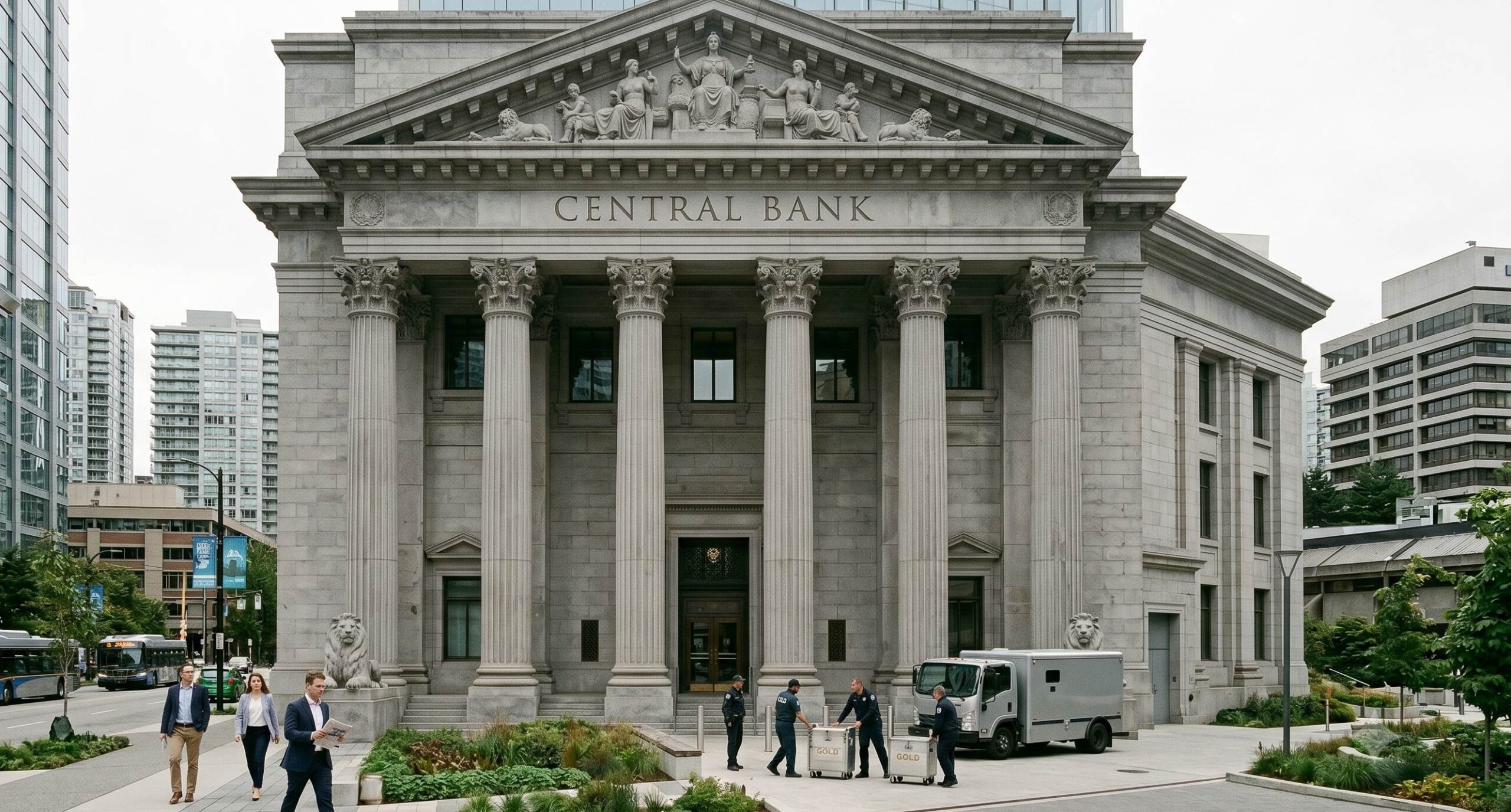
There is a simple question every gold owner should ask from time to time: who else is buying?
Not who is trading gold this week. Not who is chasing a chart pattern. Not who is trying to make a quick profit before the next Federal Reserve meeting.
The better question is: who is buying gold with a long-term purpose?
That is where central banks come in.
According to the World Gold Council, central banks bought an estimated 244 tonnes of gold in the first quarter of 2026, a strong start to the year and above the recent five-year average. That matters. These are not emotional buyers. Central banks do not line up at coin shops because they saw a dramatic price forecast online. They buy gold because they are managing national reserves, currency risk, geopolitical exposure, and long-term financial security. (World Gold Council)
And that is why their behavior is so central to the owning gold thesis.
Central Banks Do Not Buy Gold for Excitement
Individual investors often think about gold in personal terms. We think about retirement savings, inflation, family security, and whether our paper money will buy less tomorrow than it does today.
Central banks think in larger terms, but the concern is not so different.
They hold reserves to protect their countries. Traditionally, much of that reserve wealth has been held in foreign currencies and government bonds, especially U.S. dollars and U.S. Treasuries. But the last several years have reminded the world that paper reserves come with strings attached. Currencies can be inflated. Bonds can lose value when rates rise. Foreign-held assets can become political tools.
Gold is different. It is no one else’s liability.
That phrase can sound technical, but it is really the heart of the matter. A Treasury bond depends on the promise of a government. A currency depends on confidence in a central bank. Gold simply exists. It does not require a signature, a payment system, or a friendly diplomatic relationship.
The Message Behind the Buying
When central banks buy gold, they are not necessarily predicting the end of the dollar or the collapse of the financial system. That would be too dramatic.
But they are clearly saying something.
They are saying diversification matters. They are saying political risk matters. They are saying inflation risk has not disappeared. They are saying that in a world of sanctions, debt, currency volatility, and military conflict, owning a neutral reserve asset still has value.
A 2025 World Gold Council survey found that central banks expected global official gold reserves to keep rising, while many also expected dollar-denominated reserves to decline over time. That does not mean the dollar is finished. It does mean gold has moved from the sidelines back toward the center of reserve strategy. (Reuters)
For private gold owners, this is worth noticing.
Physical Gold Has a Different Role
There is also an important distinction here: central banks are not buying gold ETFs as a short-term speculation. They are buying physical bullion.
That does not mean an individual investor needs to behave like a central bank. You are not managing a national balance sheet. You do not need vaults in London, New York, or Zurich. But the principle is similar.
Physical gold is not about beating the stock market every quarter. It is about holding an asset outside the financial system. It is about having a form of wealth that is not dependent on a broker, a bank, a government promise, or a digital password.
That is why central bank buying should not be dismissed as distant or irrelevant. In many ways, it confirms the basic logic behind private gold ownership.
Should You Follow Them?
The answer is yes, but carefully.
Central banks can buy through volatility because they have long time horizons and deep reserves. Individual investors need to be more practical. At today’s prices, buying physical gold requires discipline. Premiums matter. Position size matters. Storage matters. So does your reason for owning it.
The lesson is not that you should rush out and buy gold simply because central banks are buying. The lesson is that some of the most sophisticated reserve managers in the world still see a role for physical gold, even after a historic rise in price.
That should tell us something.
Gold is not just a fear trade. It is not just a crisis trade. It is increasingly a reserve asset again.
For the individual owner, that reinforces the long-term case. You do not need to own gold because you believe tomorrow will be a disaster. You own it because the people responsible for protecting national wealth still believe it belongs in the vault.